
At the heart of this churn lies a larger business question: Who really controls creativity today—agencies, algorithms, or creators? And in a world driven by dashboards and data, does creativity still have the power to move culture, not just numbers?
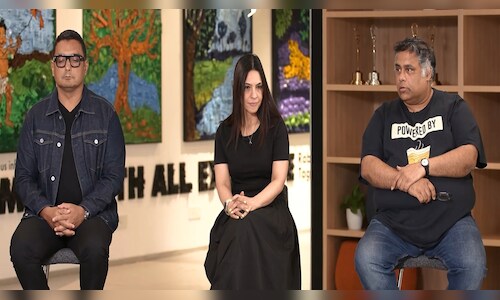
To unpack this shift, CNBC-TV18 spoke with Sukesh Nayak, Harshad Rajadhyaksha and Kainaz Karmarkar, Chief Creative Officers at Ogilvy India, on how the creative economy is being rewritten—and why reports of creativity’s decline may be premature.
Creativity is not decoration—it is problem-solving
For Sukesh Nayak, the premise that creativity is losing relevance misunderstands advertising itself.
“At its core, our business is about problem-solving,” he said. “Very rarely does somebody advertise when there is no problem. You are launching something new, fighting competition, or trying to change perception. Creativity is how you solve that problem.”
In that sense, AI and automation do not replace creativity; they simply raise the bar. Tools may change, but the need to crack human insight does not. Nayak likens it to parenting a teenager: without creativity, even daily problems become unsolvable.
From agencies to smartphones: Creativity gets democratised
If creativity still matters, where does its authority sit today? According to Harshad Rajadhyaksha, this is where the real disruption lies.
“Earlier, the structure was clear. Agencies had the privilege of calling themselves ‘creative, ’” he said. “That privilege has shifted.”
The smartphone has democratised creativity. A jalebi seller in Raipur or a college student in Indore can now command massive audiences—not by accident, but by understanding what people want to watch. That shift has fundamentally altered the balance of power.
Brands are responding accordingly, with growing spends on influencers and creator-led content. For agencies, Rajadhyaksha argues, resisting this change is pointless.
“The keyword is collaboration,” he said. “Not seeing these as silos that are against each other, but understanding, appreciating and feeding off each other’s energies.”
Agencies vs influencers is the wrong debate
The rise of creators has often been framed as a zero-sum contest with agencies. Ogilvy’s leadership rejects that framing.
Creators bring cultural proximity, speed and audience intimacy. Agencies bring something else: rigour, consistency and long-term brand stewardship.
Rajadhyaksha draws a cricket analogy. A new player may hit spectacular shots, but sustaining performance across a full tournament requires years of discipline.
“That is rigour,” he said. “And when brands are playing the long game, they still need partners who do this day in and day out.”
Why craft still separates brands from noise
In a digital ecosystem obsessed with trends and virality, craft is often the first casualty. Kainaz Karmarkar believes that is a dangerous assumption.
“There is a belief now that it’s okay if craft is missing—that it can be replaced by an influencer or a trend,” she said. “But in the long run, craft is what sets you apart.”
For her, the creative process itself has transformed. What once took a small team to nurture now requires an entire ecosystem.
“That small family raising an idea has become a village,” Karmarkar said. “Ideas don’t move sequentially anymore. They move in parallel—across formats, platforms, quick commerce, on-ground activations.”
The implication is clear: creativity today is not just about ideation, but orchestration.
The real test of relevance is not awards—it’s WhatsApp
For Nayak, the ultimate measure of success has little to do with trophies or industry applause.
“Nobody wakes up saying, ‘I’m waiting for the next ad,’” he said. “If our work lands up in WhatsApp groups of family, friends, uncles and aunties—and comes back to us—that’s the biggest validation.”
In an attention-scarce world, advertising competes not with other ads, but with movie trailers, reels, memes and live sport. Relevance, not reach alone, determines survival.
Also Read: Storyboard18 | Sir Martin Sorrell on AI, consolidation and India’s rising role in global advertising
Creativity after AI: accelerated, not replaced
Artificial intelligence is undeniably changing how content is produced and optimised. But the Ogilvy leadership is clear: AI can speed up execution, not replace judgment.
Craft, insight and cultural understanding still determine whether a brand builds equity—or just impressions.
As Nayak puts it, creators too have a craft of their own. “Craft isn’t about time spent. It’s about knowing what makes you stand out.”
The long game
As Indian advertising navigates its fastest transformation yet, the contours of the future are coming into view. Creativity is no longer the exclusive domain of agencies. Influence is no longer centralised. Execution is no longer linear.
Yet, amid the noise, one constant remains: brands that endure are built on disciplined creativity, not shortcuts.
In the AI age, creativity may be faster, more fragmented and more contested—but its strategic value, the industry’s leaders argue, is far from diminished.
Watch the accompanying video for the entire conversation.