
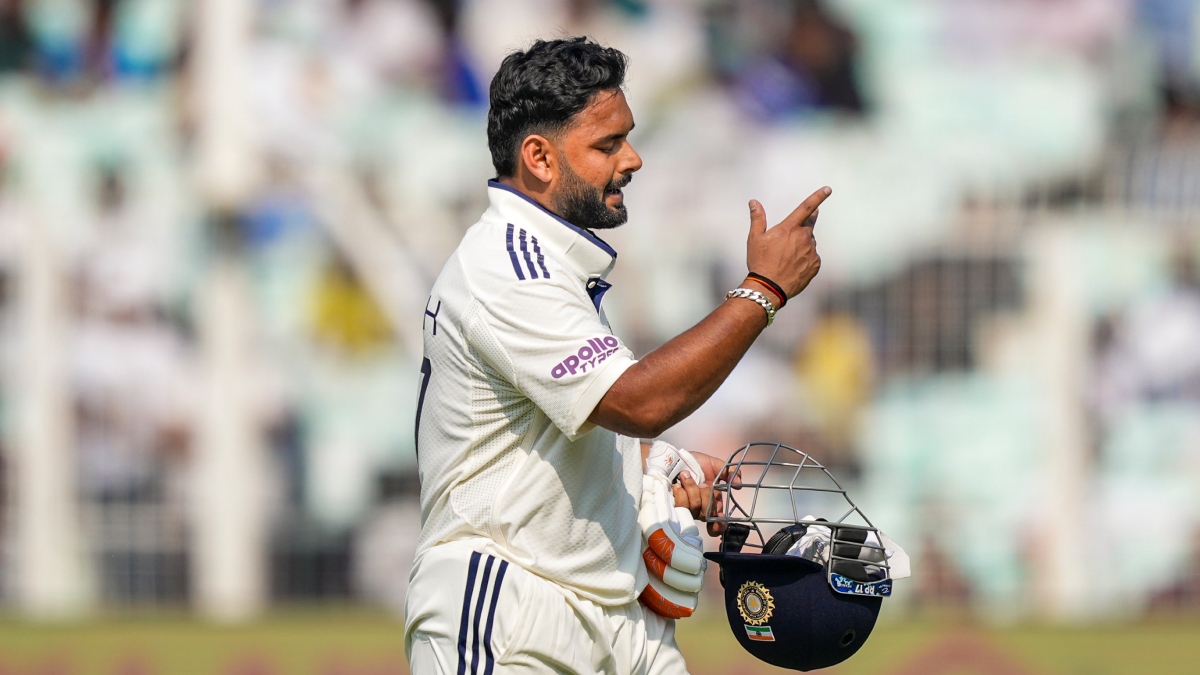
India’s recent losses in Test cricket at home point to the lack of pure Test batters. India lost the first Test to South Africa by 30 runs, failing to chase a paltry total of 124.
India’s recent losses in the home Test matches have raised a much-debated point: Is the Indian team having a lack of pure Test batters in the squad?
It may seem so. With the Indian Premier League and the T20 format seemingly being the favourite for so many people, Test cricket has to fight its way more often than not to take people in awe.
The Oval Test between India and England, the Gabba Test between Australia and the West Indies, and the Lord’s Test between India and England are some games which caught everyone in awe. Test cricket remains the pinnacle of the sport for multiple reasons.
First, it tests a player’s character, patience and skills for five days, 15 sessions and 30 hours. One bad session or one bad hour, and a team might lose the game. It tests how good or consistent a team can be over a long course of time.
T20 is the format that sells cricket
But the already popular format of T20 cricket, filled with fast-paced action, has become a format that markets cricket. It was seen in the Asian Games and will be the format in which cricket will make its return to the Olympics in 2028, after a gap of 128 years.
The format does have a bearing on the batters’ technique and patience. In T20 cricket, a batter is more often than not looking to hit strokes, looking to go big. In Tests, it is all about patience, playing out balls that pose threat of a dismissal, playing out tough phases.
T20 is just about swinging your willow, no matter if the ball is not in your sight, no matter if you have reached to the pitch of the ball. In Tests, players are generally told to play the ball under the eyes, to not hit strokes when not in reach of the ball. In SENA countries, a player is advised to play the ball as late as it can be.
Batters suited for Test format fading away
The technique of the Indian batters is no inferior to anyone in the world. But the proper Test book batters are now fading away, not just in India but everywhere in the world.
If you take a look at the likes of Rahul Dravid, Sachin Tendulkar, Brian Lara, Cheteshwar Pujara, Joe Root, and Steve Smith, they are class in Test cricket. In Smith’s case, we see his unorthodox batting stance not being a barrier to his superb batting class. Others are or were pure Test batters.
When you take a look at batters of today’s age, they do not look like the same class as they were. Yes, the pitches are in favour of bowlers to get 20 wickets for a result to be ascertained in the World Test Championships. But if the pitches were then better than what they are now, then we have to look at the class of the bowlers of the 1980s, 1990s and 2000s.
We do not see the likes of Shane Warne, Glenn McGrath, Kapil Dev, Malcom Marshal, Andy Roberts, Joel Garner, Michael Holding or Dale Steyn every day; in fact, we hardly do.
If you take a look at India’s batting, we might see KL Rahul and Shubman Gill being two batters who can be classified under the pure Test category. The likes of Yashasvi Jaiswal, Rishabh Pant, Washington Sundar and Dhruv Jurel are more of a stroke-maker than the anchors that Test cricket is about.
There are some batters in the Indian domestic circuit that suit more to the format, but most of them are not in the team. The likes of Mayank Agarwal, Ajinkya Rahane and Abhimanyu Easwaran are some of them. Karun Nair was also one, but after getting another chance, on the back of sensational domestic seasons, he failed to replicate the success in the England series and fell behind the pecking order.
The recent losses of India do point to a decline in specialist Test batters, as it does point to the decline in the specialists around the world too.