
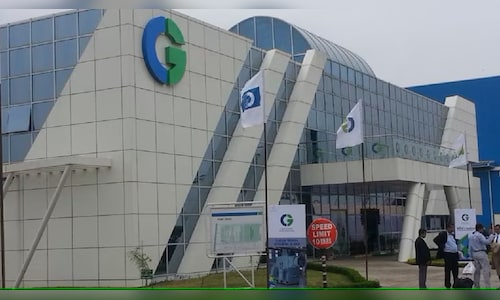
When the Murugappa Group took over CG Power in late 2020, the company was weighed down by toxic debt, collapsed investor confidence, and stalled operations. “At the time when the Murugappas took over, none of the plants were working. There was an exodus of people and then investigations by the Enforcement Directorate and the CBI. Besides that, there was a ₹1,000 crore tax demand,” Srinivasan recalled in an interview to CNBC-TV18.
The stakes were high. CG Power owed ₹2,600 crore to secured creditors, ₹750 crore to vendors, and had liabilities tied to overseas subsidiaries. In a matter of months, Srinivasan and his team reconstructed five years of distorted financials across over 150 accounts and negotiated settlements that restored confidence in the company. “Secured creditors took about a 43% haircut. But for operational creditors, mostly MSMEs, we paid them in full. I apologised to each one and told them it would never be repeated,” he said.
Under Srinivasan’s guidance, CG Power not only became debt-free but also returned to profitability. The company regained market share, generated sufficient cash flows, and resumed equity dividends after a gap of eight years. “Normally, when you say turnaround, it means a loss-making company starts making profits or becomes EBITDA positive. Here, look at the complete landscape of the turnaround,” he explained.
The decision by the Murugappa Group to acquire CG Power during the peak of the COVID-19 pandemic was itself bold. “Whenever you buy an asset, you should feel happy, but given the circumstances, no one knew when COVID would end. The accounts had a disclaimer; there was no balance sheet you could rely on. Notwithstanding that, an offer was made,” Srinivasan highlighted.
Also Read | CG Power faces ₹365-crore tax demand for AY18; to file appeal
The human side of the turnaround was equally critical. Employee morale, vendor trust, and supplier relationships had to be restored amid uncertainty. “I also spoke to the board and got permission to give bonuses for a couple of years that had not been paid — whether eligible or not — because they had been battered,” he shared.
Today, CG Power stands as a testament to meticulous planning, decisive leadership, and strategic risk-taking. Srinivasan’s book offers a blueprint for India’s next generation of corporate leaders, showing that even the most complex corporate crises can be transformed into success stories with vision and execution.
Below is the excerpt of the discussion.
Q: I want to start by asking a very simple, basic question before I get to the turnaround and what you did: why did you decide to document it? It’s a wonderful read — 200-odd pages — and it’s breezy and easy to read. But when did the idea come into your head to start documenting this?
Srinivasan: CG Power is a very, very complex case for restructuring. It had all kinds of complications. It had investigations, it had recasting of books, it was an NPA, and then COVID was in full flow. At the time when the Murugappas took over, none of the plants were working. There was an exodus of people and then investigations by the Enforcement Directorate and the CBI. Besides that, there was a ₹1,000 crore tax demand. Normally when you say turnaround, it means a loss-making company starts making profits or becomes EBITDA positive. Here, look at the complete landscape of the turnaround.
The company regained market share. It had been a leader in its fields, then lost market share, and regained it. It made operating profits, finally made profit after tax, and generated enough cash flows to repay the debt and become debt-free. It also resumed equity dividends after about eight years. Besides that, they resolved many of the legacy issues that had been pending for seven to eight years.
Considering all this, I thought the story had to be told because it could act as guidance for the next generation. In many unique areas where the company had to deal with issues, there were no past precedents or guidelines. For example, for recasting, there was no specific guideline under the Act. There was a provision under the Companies Act that the tribunal could direct you to recast, but who would sign the balance sheet? What would be the scope of the recasting auditor? There were a number of issues. The Union Ministry of Corporate Affairs was directly involved. They themselves told me this was the first case that had been completed and they wanted me to document it.
Sometimes the bankers also told me — SBI in particular — that this was one of the fastest cases of turnaround. All of this weighed on my mind. When I thought everything was completed, I decided I would write it down.
Q: How did the Murugappa Group happen to come across CG Power? Mr. Vellayan reflects in the chapters of the book that one of the group companies was exposed to CG Power, they were not being paid on time, and it came up in meeting after meeting. So there was already some knowledge about the company. Was that the starting point from which you scratched the surface?
Srinivasan: You are right. In one of the companies, money was due from CG, and when they asked for the reasons for the delay, it surfaced that the company was undergoing problems and it might take time. They started making enquiries. State Bank happened to be the lead banker for CG as well as for the Murugappa Group. That is how it all started. State Bank then said, “Why don’t you have a look at the company?” Of course, there were a number of issues.
Finally, in August 2020, after multiple levels of discussions — even then COVID was in full flow — based on available data and information, the Murugappa Group took a call that they would make a bid to acquire the company. An offer was made to State Bank through Tube Investments of India (TI). They wanted to go through a Swiss Challenge to see if anyone else would give a better price, but nobody came forward. Ultimately, TI was declared the winner, and that is how they acquired the company.
Q: For a moment, the group would have had doubts, right? Here’s an asset, you are the only bidders, it is put up for auction, and still you are the only ones. This was during COVID, when people were retreating, not expanding.
Srinivasan: I would put it this way — there was some kind of uneasiness. Whenever you buy an asset, you should feel happy, but given the circumstances, no one knew when COVID would end. It could take another two or three years, delaying recovery. The accounts had a disclaimer; there was no balance sheet you could rely on. Therefore, you never knew what was hidden in the cupboard. Notwithstanding that, an offer was made. There was some nervousness, and with that, they asked me to get in. I had no clue what was there.
Q: So you got the call one fine morning?
Srinivasan: I was in Mumbai. Even though it was COVID, I was working for IL&FS under a Government of India appointment. One of the senior family members called me and said the group was looking at an acquisition. They did not tell me the name because it was price-sensitive. They said they wanted me to get involved fully. I thought it was an advisory or consultancy job. On November 26 2020, the company was acquired — and just a week before that Vellayan Subbiah called me and said they were talking to this company and wanted me to be the CEO. I asked for some time. He said, “Take your time, but don’t come back and tell us no. I want you to do this for us.”
Q: This was November 2020, smack in the middle of COVID. That must have been tough — no real sense of what this disease could do. The vaccine came only in late November, right?
Srinivasan: In fact, I organised vaccines for the employees after I joined. Vellayan was supposed to come with me for the first board meeting but he got infected with COVID, so he could not join. I came alone. This was under the RBI stressed asset mechanism, so the entire board had to be replaced. All the board members were replaced and the new board took charge. I was appointed MD. From then onwards, I stayed at the CG headquarters. COVID was really in full flow.
Q: Lots of meetings on Zoom?
Srinivasan: Meetings were only on Zoom. I had a big hall, and someone would sit at the far end of the table. If at all you spoke to someone, it was through the phone or Zoom. No personal meetings.
Q: Let’s talk about what you dealt with first — lenders, bankers, suppliers, vendors. Everything seemed like a priority. You had to prioritise. How did you do it?
Srinivasan: I’ll give you an overview. About ₹2,600 crore was due to secured creditors. The company was an NPA. CG had given guarantees for loans to its subsidiaries outside India. Those loans became bad. The value of those guarantees was ₹1,280 crore and the banks wanted to invoke the guarantee and recover the money from CG. Then about ₹750 crore was due to vendors — unsecured creditors — for almost seven to eight months. Besides that, there were employee dues.
Even for me to get a complete handle on this took a couple of weeks because whenever you asked for information, it took time.
Q: And the book says you settled all of this in a month.
Srinivasan: Secured creditors — discussions were already going on. Guarantees took time. It was contingent upon TI taking 51% equity and therefore ₹800 crore had come in — TI had infused equity of ₹600 crore, ₹200 crore was to come later. On the strength of TI infusing that money and its guarantee, State Bank was willing to give a new loan of ₹800 crore. So ₹1,600 crore was available to me. We started negotiating with the secured creditors first and settled for about 43%.
Q: So secured creditors and guarantee holders together were about ₹3,600 crore, and you settled for about ₹1,200 crore?
Srinivasan: Yes. Unlike IBC, where every creditor is involved, under the RBI stressed asset mechanism you deal only with secured creditors through the lead lender. The rest you handle one-on-one. For the ₹1,280 crore guarantees, I settled most by January–February because March was coming and banks wanted to clean up their books. Then for unsecured creditors — mostly vendors — I started paying gradually. About ₹700 crore. No discount for them. Secured creditors took about a 43% haircut. But for the guarantees, we settled at about 26% because they still had assets to proceed against the principal debtor.
Q: For operational creditors, you paid them in full.
Srinivasan: Yes, because they are mostly MSMEs. They had already been battered. I apologised to each one of them and told them it would never be repeated. I asked them to accept this and start supplying again.
Q: And then there were employees. You write in the book that you had to reassure them too.
Srinivasan: Absolutely. We paid the dues. They were concerned about whether their PF money was safe. I told them I would send each one their ledger account and get the money transferred to the Government of India PF account, so it would be permanently safe. They were very receptive. I also spoke to the board and got permission to give bonuses for a couple of years that had not been paid — whether eligible or not — because they had been battered.
Watch accompanying video for entire conversation.